

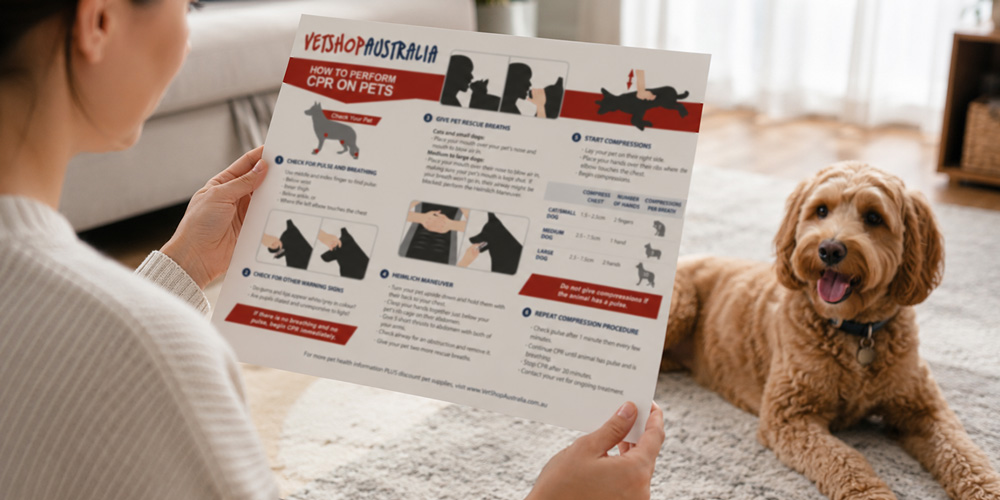
Emergencies have a habit of happening when we least expect them. Whether it is an accident, an injury or a sudden medical emergency, knowing what to do in those first few critical moments can make a significant difference while you seek professional veterinary care.
That is why Dr Mark Perissinotto created the CPR for Pets poster, helping pet owners understand the basic steps involved in responding to an emergency situation. Download your free copy below and keep it somewhere easily accessible at home, such as on the fridge, in a first aid kit or near your pet supplies.
Download the Free CPR for Pets Poster
Why Every Pet Owner Should Know Basic CPR
While nobody likes to think about emergency situations, being prepared can help you respond more confidently if something unexpected occurs. CPR is designed to help maintain circulation and oxygen delivery when an animal is not breathing and has no detectable pulse.
It is important to remember that CPR is an emergency measure and does not replace veterinary treatment. Any pet that requires CPR should receive immediate veterinary attention as soon as possible.
Recognising an Emergency
One of the most important parts of responding to an emergency is recognising when your pet may need immediate assistance. Warning signs can include unresponsiveness, difficulty breathing, pale or grey gums, collapse and the absence of a detectable pulse.
If you suspect your pet is experiencing a medical emergency, contact your veterinarian or nearest emergency veterinary clinic immediately while preparing to provide first aid if required.
Checking for Pulse and Breathing
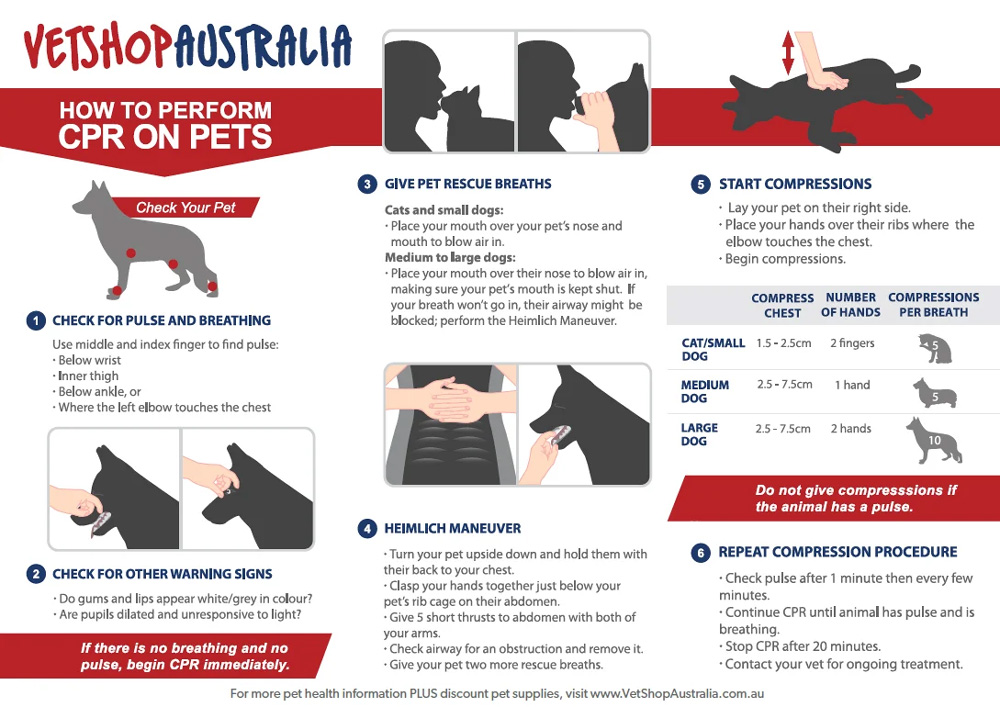
Before performing CPR, it is important to determine whether your pet is breathing and whether a pulse can be detected. Common pulse locations include the inner thigh, below the wrist, below the ankle and near the point where the left elbow meets the chest.
If your pet has a pulse and is breathing, CPR should not be performed.
Understanding Rescue Breaths
Rescue breathing may be required when a pet is not breathing independently. The technique varies slightly depending on the size of the animal. Small pets generally require breaths over the nose and mouth, while larger dogs typically receive breaths through the nose with the mouth held closed.
If air cannot be delivered successfully, an airway obstruction may be present and should be investigated immediately.
When Chest Compressions Are Required
Chest compressions may be necessary if there is no detectable pulse. The exact technique differs depending on the size of the animal, with smaller pets requiring gentler compressions and larger dogs requiring more force.
Effective compressions help circulate oxygenated blood throughout the body while emergency veterinary care is being arranged.
Be Prepared Before an Emergency Happens
The best time to prepare for an emergency is before one occurs. Consider keeping a pet first aid kit at home and save the contact details of your regular veterinarian and nearest emergency clinic in your phone.
You may also wish to keep essential items on hand from our pet first aid supplies range to help support emergency preparedness.
Keep the CPR Poster Somewhere Visible
During an emergency, stress can make it difficult to remember important information. Keeping a CPR guide somewhere visible and accessible can help you act more confidently if the unexpected happens.
Many pet owners choose to keep their CPR poster on the fridge, inside a cupboard door, near pet supplies or alongside their household first aid kit.
Download the Free CPR for Pets Poster
The CPR for Pets poster was designed as a simple visual reference guide that outlines the basic steps involved in responding to an emergency. Download your free copy today and consider sharing it with family members or anyone who regularly cares for your pets.
Download the CPR for Pets Poster
Summary
Pet emergencies are stressful, but preparation can help you respond more confidently. Understanding the basics of CPR, recognising emergency warning signs and having a clear action plan may help you support your pet while seeking immediate veterinary care. Taking a few minutes today to review and download the CPR for Pets poster could make all the difference in an emergency situation.
Disclaimer: This article is intended for educational purposes only and should not replace professional veterinary advice or accredited pet first aid training. Always seek immediate veterinary assistance during an emergency.