

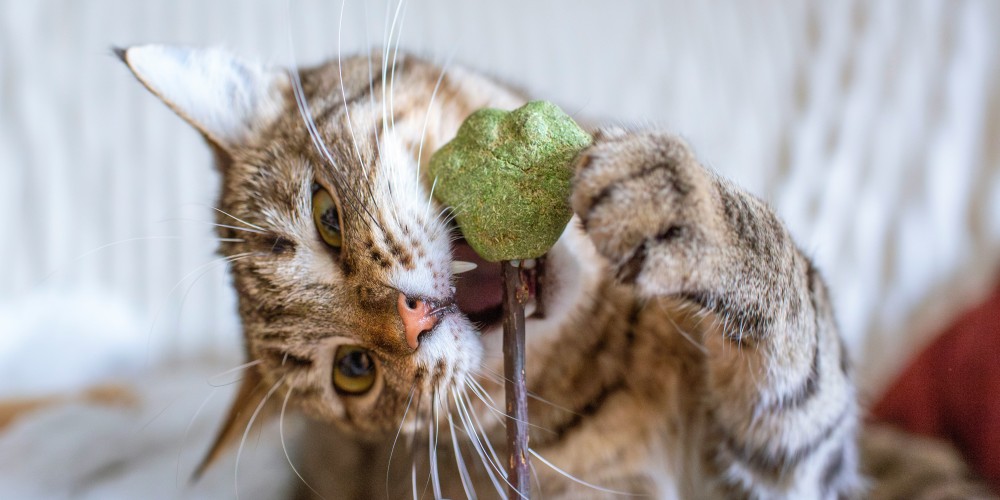
If you’ve ever watched a cat roll, purr, or suddenly dash around like it’s on a mission, you might be witnessing the effects of catnip. But what is catnip, and what does catnip do to cats exactly? In this article, we’ll uncover the mystery behind this fascinating plant: what it is, how it affects our feline friends, whether it’s safe, and how you can use it to enrich your cat’s environment. We’ll also cover different forms of catnip and answer your most curious questions, like can kittens have catnip, or is catnip bad for cats?
What Is Catnip?
Catnip, also known by its scientific name Nepeta cataria, is a leafy green herb belonging to the mint family. With heart-shaped, serrated leaves and small, lavender-coloured flowers, catnip is native to Europe and parts of Asia but now grows widely in North America and Australia.
In the past, humans brewed catnip in teas or used it as a herbal remedy for ailments like insomnia or digestive troubles. While its human use has faded, its popularity has skyrocketed among cat lovers for a very different reason: the strange and amusing way it affects felines.
How Does Catnip Affect Cats?
The secret to catnip’s power lies in a compound called nepetalactone, which is found in the plant’s leaves, stems, and seeds. When a cat sniffs catnip, this compound binds to receptors inside their vomeronasal gland, essentially a scent analyzer located in the roof of their mouth.
This interaction can trigger a euphoric response, leading to a burst of energetic or blissed-out behaviours. You might notice your cat rubbing its head against a toy, rolling on the floor, purring, meowing, or suddenly sprinting around the house. These effects typically last about 10–15 minutes, after which the cat becomes temporarily immune to catnip’s allure.
Catnip is often included in feline enrichment items like toys or sprinkled on cat treats, adding an extra layer of enjoyment.
Why Do Some Cats Love Catnip While Others Don't?
Not all cats are affected by catnip. In fact, whether your cat responds to it is determined by genetics. Around 50-70% of cats are genetically wired to respond to nepetalactone. So if your feline seems totally indifferent, it’s not unusual.
Fortunately, alternatives like silvervine or valerian root can trigger similar responses in some cats that don't react to catnip, offering another route to play and stimulation.
Can Kittens Have Catnip?
Can kittens have catnip? Technically, yes, but it might not do anything! Kittens under six months of age typically don’t respond to catnip, even if they carry the gene. Their response system hasn’t developed fully yet, so it’s safe to wait until they’re a bit older before introducing it.
There’s no harm in exposure, but if your kitten doesn’t react, don’t worry! It may still become a catnip fan with time.
What Are Some Practical Uses of Catnip?
Aside from entertainment, catnip can be incredibly useful in daily life with cats. Here are a few ideas:
- Sprinkle dried catnip on toys to stimulate play and exercise, especially for indoor cats.
- Use catnip to reduce stress in situations like vet visits or car rides. Some cats find it soothing.
- Rub catnip on scratching posts or new beds to encourage your cat to engage with them.
Mix catnip with your cat’s favourite treats to turn snack time into playtime.
It’s an easy and natural way to improve enrichment and help redirect energy in a healthy way.
What Are Some of the Different Forms of Catnip Available?
Catnip comes in several forms, each with its own perks:
- Dried leaves: Easy to sprinkle on toys or scratching posts.
- Sprays: Convenient for travel or training use, just spritz on surfaces.
- Infused toys: Long-lasting and fun for solo play.
- Live plants: Great for a garden or sunny windowsill. Cats can nibble and sniff fresh leaves.
Many of these are combined with catnip-infused treats to keep your pet engaged, especially if they enjoy interactive food puzzles or reward-based training.
FAQ Section: Catnip Queries Answered
Can I grow catnip at home?
Yes! Catnip is hardy and grows well in many Australian climates. It prefers sunny spots and well-drained soil. Just be prepared for feline visitors.
How often can I give my cat catnip?
It’s safe to offer catnip a few times a week. Overexposure can make some cats lose interest, so giving it in moderation helps keep the magic alive.
Does catnip lose its potency over time?
Yes, catnip loses its strength as nepetalactone breaks down. Store it in a sealed container away from light and heat to maintain freshness.
Can catnip help with my cat's anxiety?
In some cases, yes. While reactions vary, some cats find catnip calming. Others may get too hyped up, so monitor your cat’s response to see if it helps. If you're looking for calming options, browse through soothing cat treats that include relaxation-supporting ingredients.
Is catnip safe for senior cats?
Absolutely! As long as your cat still responds to catnip, there’s no age limit. It can be a great way to keep older cats active and entertained.
Are there alternatives if my cat doesn't like catnip?
Yes. Silvervine, Tatarian honeysuckle, and valerian root can provide similar effects for cats who don't respond to catnip. These are great alternatives worth trying.
These are great alternatives often featured in specialty cat food treats.