
You give your dog their parasite treatment, tick it off the list and assume they're protected. Easy, right?
Usually, yes. But parasite protection isn't quite as simple as remembering to give your dog "something" every now and then.
Different products protect against different parasites. Doses can be forgotten. Weight changes matter. And one of the easiest mistakes is assuming your dog's current treatment covers more than it actually does.
So, how confident are you in your dog's parasite protection? Here are some common mistakes worth checking.
Mistake 1: Assuming One Product Protects Against Everything
Fleas. Ticks. Heartworm. Intestinal worms.
They're often grouped together under "parasite protection", but that doesn't mean every treatment protects against all of them.
One product may target fleas and ticks but not heartworm. Another may cover certain intestinal worms but require another treatment for tapeworm. The exact coverage depends on the product you're using.
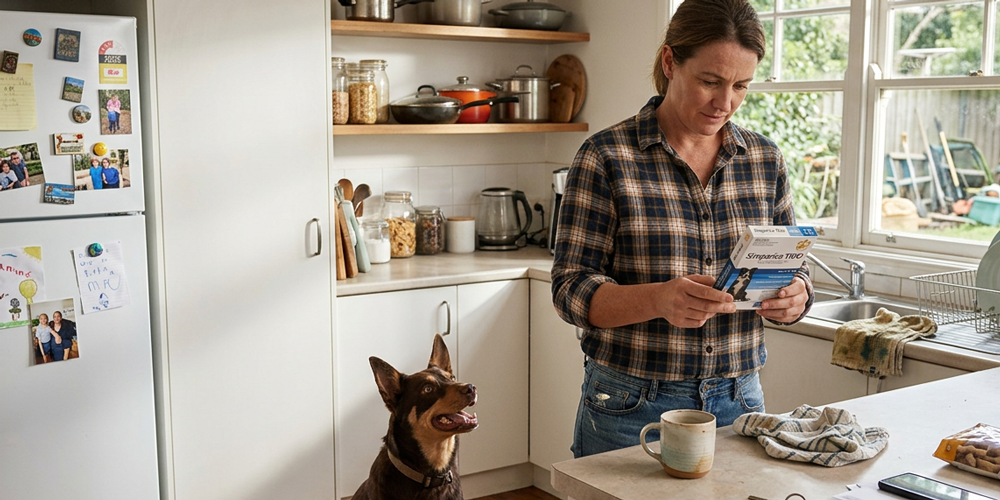
That's why knowing the name of your dog's treatment isn't enough. Take a look at the label and check exactly which parasites it covers.
Broad-spectrum options can make parasite protection simpler. For example, NexGard Spectra provides protection against fleas, ticks, heartworm and common intestinal worms when used according to the label.
Depending on the product and your dog's individual needs, additional parasite protection may still be required. If you're unsure whether there are gaps in your dog's current routine, ask your veterinarian.
Mistake 2: Waiting Until You See Fleas or Ticks
If you haven't seen a flea on your dog lately, that's good news.
It doesn't necessarily mean parasite protection is no longer needed.
Fleas can be difficult to spot, and much of the flea life cycle occurs in the environment rather than on your pet. Ticks can also be surprisingly easy to miss underneath fur, particularly on dogs with thick or long coats.
Waiting until you physically find a parasite turns prevention into reaction.
Regularly checking your dog's coat is still a great habit, particularly after outdoor adventures, but those checks should complement appropriate parasite prevention rather than replace it.
Mistake 3: Giving the Next Dose a Little Too Late
"Was it last weekend... or the weekend before?"
If you've ever asked yourself that while holding your dog's parasite treatment, you're definitely not the only one.
Life gets busy, and parasite treatments aren't always the easiest thing to remember.
The problem is that preventative products are designed around particular dosing schedules. Repeatedly stretching the time between doses may leave your dog without the intended continuous protection.
Don't rely on memory alone.
Put the next dose in your phone calendar as soon as you administer the current one, set a recurring reminder or keep a simple treatment record somewhere you'll actually see it.
It takes less than a minute and removes the "when did I last give it?" guessing game completely.
Mistake 4: Using the Same Dose After Your Dog's Weight Changes
When was the last time you weighed your dog?
Many parasite treatments are sold in different sizes based on a dog's body weight. That's easy to remember with a rapidly growing puppy, but it's also relevant for adult dogs whose weight changes over time.
If your dog has gained or lost enough weight to move into a different product weight range, the treatment you've always purchased may no longer be the appropriate one.
Check your dog's current weight against the product label rather than automatically buying the same box every time.
This is particularly important for growing puppies, dogs undergoing weight management and dogs whose body size has changed noticeably.
Mistake 5: Thinking Parasites Are Only a Warm-Weather Problem
Spring is an obvious time to start thinking about fleas and ticks again. The weather is warming up, dogs are spending more time outside and we're heading back into parks, gardens, beaches and walking tracks.
But that doesn't mean parasite protection should automatically stop when the weather cools down.
Parasite risks vary depending on where you live, your dog's lifestyle, the parasite involved and local conditions. Heartworm prevention, for example, isn't simply a summer consideration.
Rather than switching protection on and off based purely on the season, follow the recommended dosing schedule for your dog's products and speak with your veterinarian about an appropriate year-round parasite control plan.
Mistake 6: Forgetting That Your Dog's Lifestyle Can Change Their Risk
Not every dog lives the same life.
A dog that spends most of its time at home has different exposure opportunities from one that regularly goes camping, explores bush tracks, visits dog parks or travels to different parts of Australia.
Even something as simple as moving house, taking a holiday or adding another pet to the family can change what your dog is exposed to.
This doesn't mean outdoor-loving dogs need to stay home. It means parasite protection shouldn't necessarily be a "set it and forget it forever" decision.
It's worth reviewing your dog's routine occasionally and asking whether their current protection still suits where they go and what they do.
Mistake 7: Forgetting to Check Your Dog Even When They're Protected
Giving parasite prevention doesn't mean you should stop looking at your dog.
Regular hands-on checks are particularly valuable for ticks. Run your fingers slowly through your dog's coat and pay close attention around the head, neck, ears, under the collar, between the toes and other less obvious areas.
This can easily become part of grooming or your usual post-walk routine.
If you're heading into areas where ticks may be present, checking your dog when you return is a simple habit worth keeping.
No preventative should be treated as a reason to ignore unusual symptoms either. If your dog appears unwell, seek veterinary advice regardless of whether their parasite treatment is up to date.
Quick Check: Is Your Dog's Protection Actually Up to Date?
Take 60 seconds and see if you can answer these questions:
- What parasite treatment is your dog currently using?
- What exactly does it protect against?
- When was their last dose?
- When is their next dose due?
- Is it the correct product for their current weight?
- Does their current lifestyle affect their parasite exposure?
If you had to guess at a couple of those answers, now is a good time to check the packet or your treatment records.
How Do You Choose the Right Parasite Protection?
There's no single parasite product that's automatically the best choice for every dog.
The right routine depends on factors including your dog's age, weight, health, lifestyle, location and the parasites that need to be covered.
Some owners prefer broad-spectrum products that combine several types of protection into one treatment. Others may use separate products as part of their dog's parasite control plan.
VetShopAustralia stocks a range of dog parasite prevention products, including flea, tick, heartworm and intestinal worm treatments.
Always read and follow the product label carefully. If you're changing products, aren't sure what your dog currently needs or think there may be a gap in their protection, speak with your veterinarian before making changes.
One Tiny Habit That Makes Parasite Protection Easier
Here's perhaps the easiest takeaway from this entire article:
Every time you give a parasite treatment, immediately schedule the next one.
Don't tell yourself you'll remember. Don't leave the empty packet sitting on the bench as a reminder.
Put the next date straight into your phone.
It's a tiny habit, but it removes one of the easiest parasite protection mistakes to make.
Summary
Giving your dog parasite prevention is important, but effective protection also means knowing what their treatment covers, following the correct dosing schedule and making sure the product still suits their weight and lifestyle.
Check the label, schedule the next dose and continue regularly checking your dog's coat. If you're unsure whether your dog's current routine provides the protection they need, your veterinarian can help identify any potential gaps.